
Choosing the right mouse pad material is more important than many people think. The material affects mouse accuracy, comfort, durability, and even desk safety.
This guide explains the most common mouse pad materials, compares their pros and cons, and helps you choose the best option for your needs.
I. What Materials Are Mouse Pads Made Of?
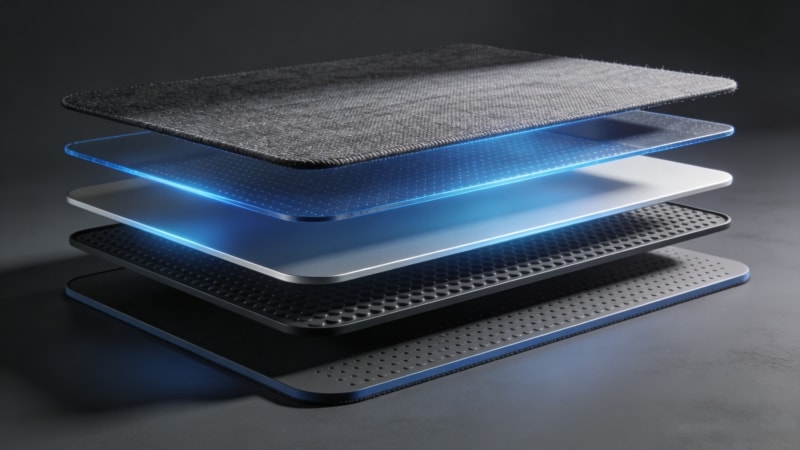
Most mouse pads are made with two layers:
- A surface layer for mouse movement
- A base layer to prevent slipping
The most common materials include:
- Fabric surface with rubber base
- PU leather or leather
- Hard surfaces like plastic, aluminum, or glass
- Extended desk mats made from rubber and fabric
Mouse pads and desk mats are available in a variety of sizes to suit different setups and preferences.
Each material suits different uses, such as gaming, office work, or printing.
II. Mouse Pad Fabric Materials Explained
Fabric mouse pads are the most popular choice worldwide.
Common fabric types include:
- Polyester fabric – smooth, durable, and cost-effective
- Lycra or microfiber – softer touch, better comfort
- Textured fabrics – designed for more control or speed
Fabric surfaces offer:
- Good balance between speed and control
- Smooth glide for the mouse, enhancing speed and comfort
- Excellent tracking for both optical and laser mice, ensuring precise cursor movement
- Comfortable wrist support
- Excellent compatibility with optical and laser mice
Because fabric surfaces accept ink well, they are also the best choice for printing and sublimation.
III. Base: The Foundation of Mouse Pad Performance
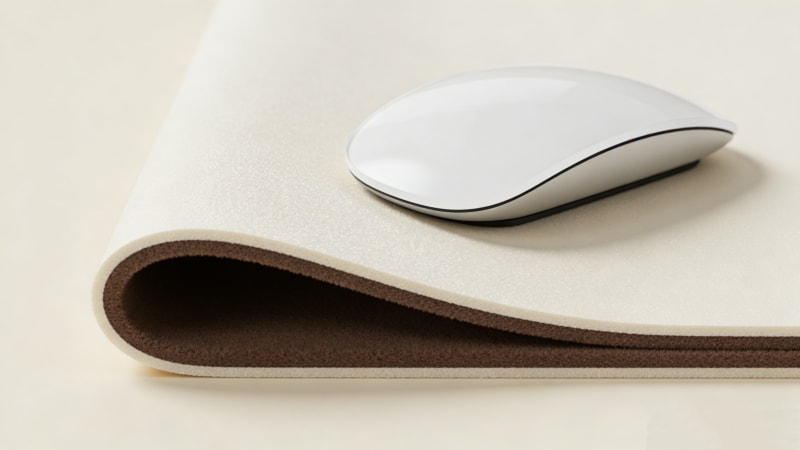
The base is just as important as the surface.
Most quality mouse pads use a rubber base to:
- Prevent slipping during use
- Protect the desk surface
- Improve stability and comfort
Rubber is a highly usable material for both mouse pads and desk mats because it provides excellent stability and comfort, making it a preferred choice for designing quality mousepads.
1. Natural Rubber vs Synthetic Rubber
- Natural rubber: better grip, eco-friendly, long-lasting
- Synthetic rubber: lower cost, less grip
Thickness Options
- 2mm – slim and lightweight
- 3mm – balanced comfort and control
- 4mm – extra cushioning for long hours
Rubber bases are used in both mouse pads and desk mats, making them ideal for extended desk coverage.
2. Leather & PU Mouse Pads for Office Use
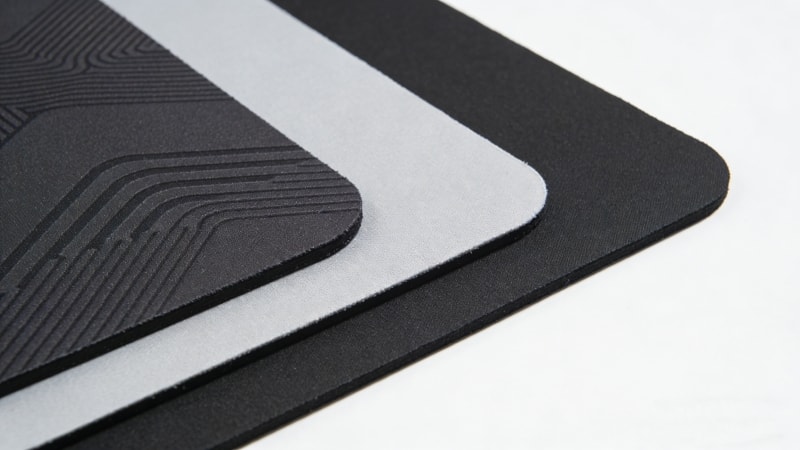
Leather and PU mouse pads are popular in office environments. Many users find the look and feel of leather mouse pads to be really nice, adding a touch of elegance to any desk. They are durable, easy to clean, and provide a smooth surface for mouse movement. Leather mouse pads are a perfect choice for those seeking a premium, professional appearance in their workspace.
PU Leather
- Waterproof and easy to clean
- Affordable and consistent quality
- Modern, professional appearance
Genuine Leather
- Premium look and feel
- Higher cost
- Requires more care
Leather mouse pads are:
- Best for office and business desks
- Not ideal for high-precision gaming
- Less suitable for printing
3. Hard Surface Mouse Pads
Hard mouse pads focus on speed and durability.
Common types include:
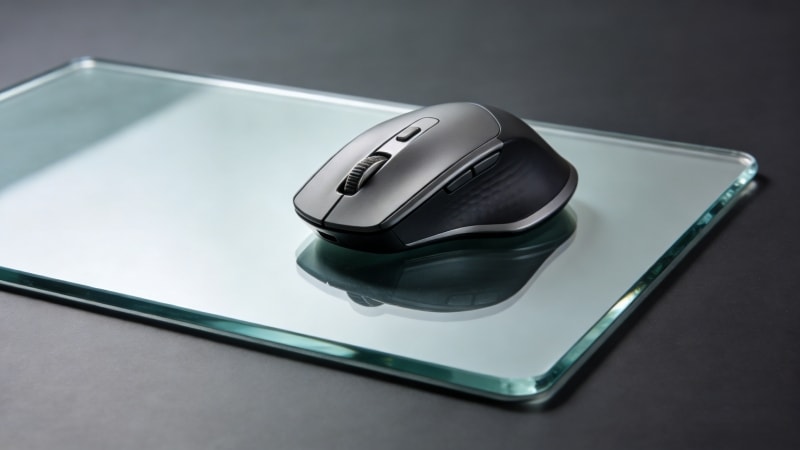
- Plastic – lightweight and affordable
- Aluminum – strong and long-lasting
- Glass – very smooth and fast
Advantages:
- Very fast mouse movement
- Easy to clean
- Long lifespan
- Often preferred for precision work, such as graphic design or tactical gaming, where accuracy is critical
Disadvantages:
- Less comfortable for long use
- Louder mouse movement
- Less forgiving for precise control
- Some hard surface mouse pads can feel rough to the touch, which may not be comfortable for everyone
Hard surfaces are mainly used by gamers who prefer speed over comfort.
IV. Mouse Pad Alternatives: Desk Mats and Other Options
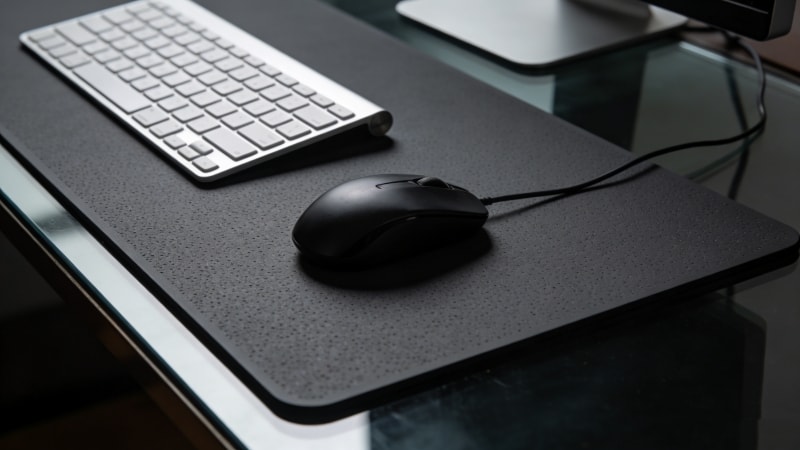
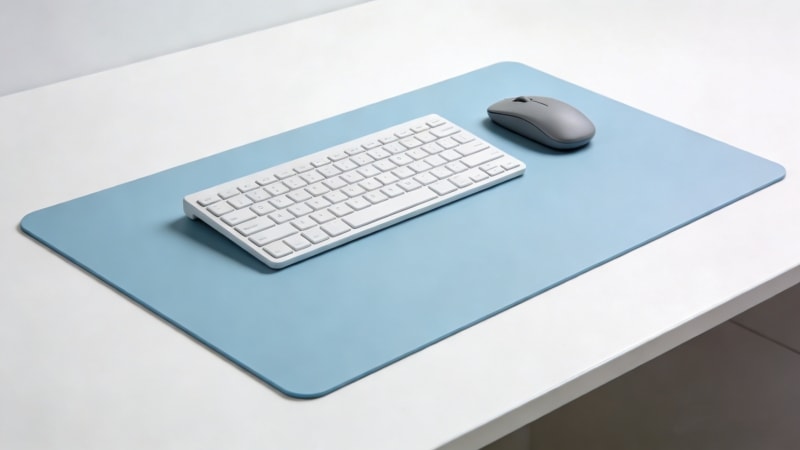
Some users choose desk mats or other options to replace the traditional mouse pad for their computer setup. These alternatives can add value by offering more features or style to your workspace. For example, a rubber desk mat can add both protection and style to your desk. Desk mats are practical because they can knock out multiple needs at once, providing a surface for both your keyboard and mouse. Many customers tend to prefer desk mats for their versatility and coverage, and user feedback shows true satisfaction with these alternatives. However, some users still prefer a traditional mousepad for specific tasks or setups.
1. Rubber Desk Mats
- Cover keyboard and mouse area
- Protect the entire desk
- Provide stable, non-slip surface
2. Other Alternatives
- Bare desk surface (not recommended long-term)
- Glass desks (require special mouse feet)
Rubber desk mats are the most practical alternative, especially for modern workspaces and large desks.
V. Best Mouse Pad Material by Use Case
| Use Case | Recommended Material |
| FPS gaming | Fabric + rubber |
| Fast-paced gaming | Hard surface |
| Office work | PU leather |
| Printing / sublimation | Polyester fabric |
| Large desks | Rubber desk mat |
VI. Fabric vs Leather vs Hard Surface (Quick Comparison)
- Fabric: best balance of comfort, control, and versatility
- Leather / PU: clean, professional, easy to maintain
- Hard surface: fastest movement, less comfort
Each material has a clear purpose. There is no one-size-fits-all solution.
VII. How to Choose the Right Mouse Pad Material
Ask yourself:
- Do you need control or speed?
- How many hours do you use a mouse daily?
- Is your desk large or small?
- Do you need easy cleaning?
- Do you plan to print or brand the mouse pad?
- Do you qualify for a specialized mouse pad, such as an ergonomic or gaming model, based on your specific needs?
Answering these questions makes the choice simple.
VIII. Conclusion: Choose the Right Material with a Trusted Manufacturer
There is no single “best” mouse pad material for everyone.
The best choice depends on how you work, play, and use your desk.
Fabric mouse pads with rubber bases remain the most popular and reliable option.
Desk mats are a smart upgrade for larger desks and modern offices.
If you are sourcing mouse pads, desk mats, or rubber-based products in bulk, working directly with a manufacturer ensures stable quality and flexible customization.
Visit www.fdtrubber.com to explore materials, production capabilities, and OEM/ODM solutions — or contact us to send an inquiry and receive a customized quotation.