I. Introduction
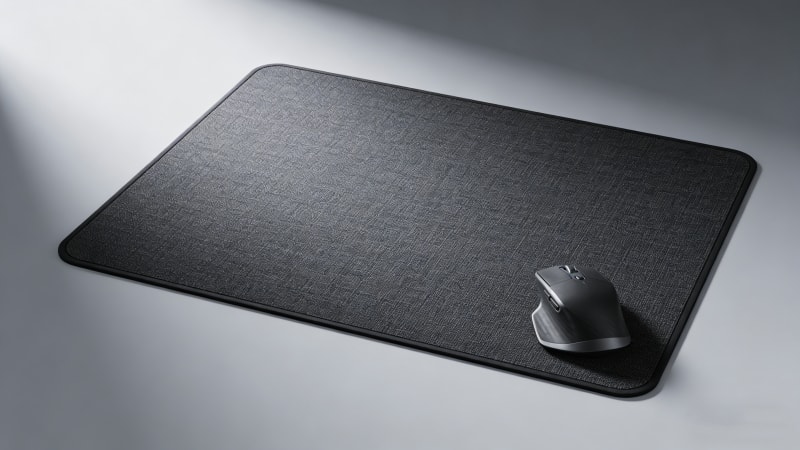
A quality mouse pad consists of two essential parts: the rubber base on the bottom and the fabric layer on top. The rubber base’s primary job is to provide grip and prevent the pad from sliding around on the desk. However, the top fabric layer is the key element that determines the mouse movement feel and the pattern print quality.
In the world of mouse pads, there are various types and each category of surface offers unique characteristics to suit different preferences and needs.
There are many types of mouse pad fabrics on the market. When selecting a mouse pad fabric, factors such as design, brands, and size play a crucial role in achieving the right balance of comfort, style, and functionality. This guide will provide a straightforward comparison to help you select the most suitable one for your customers.
Many manufacturers also offer custom designs and bulk order options to accommodate clients with specific requirements.
II. The Two Main Categories: Speed vs. Control
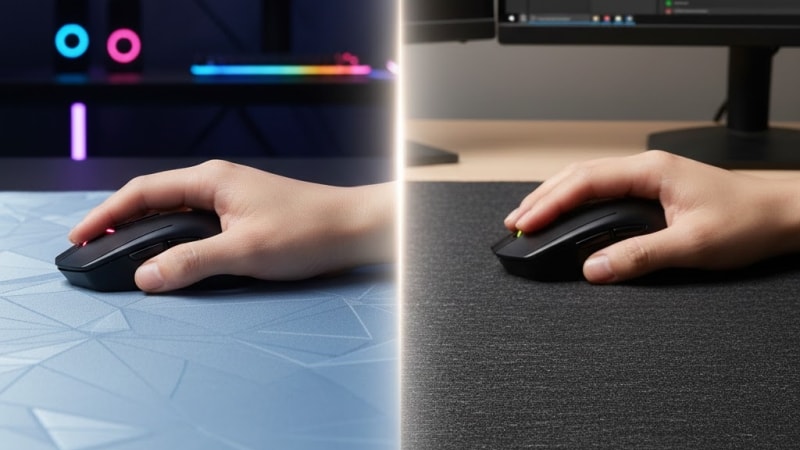
The easiest way to understand mouse pad fabrics is to classify them into two simple categories: speed and control. Gaming mouse pads are often divided into these two categories, with each type catering to different gaming styles and play preferences. Speed pads are designed for fast, sweeping movements, ideal for gamers who prefer quick play and rapid reactions. Control pads, on the other hand, offer more resistance, providing precision for those who value accuracy in their gaming sessions.
Choosing the right category matches your needs and enhances your overall gaming experience.
1. Speed Fabrics
- Feel: Super smooth to the touch, often described as feeling like ice.
- Characteristic: Provides very fast mouse glide with minimal friction and resistance. A speed pad is designed for precision and quick aim, offering a significant benefit for users who prioritize fast, accurate movements.
- Target Users: Best for competitive gamers who require quick, sweeping movements and rapid reaction times. Speed pads are ideal for gamers who value accuracy in rapid gameplay.
- Example: Fine Mutispandex (a common fine-weave polyester fabric).
2. Control Fabrics
- Feel: Features a textured surface that feels slightly rougher.
- Characteristic: As a control pad, it offers higher friction and a consistent surface, allowing users to focus on precise movements.
- Target Users: Ideal for graphic designers or FPS (First-Person Shooter) gamers who need pixel-perfect positioning and aiming. Control pads are often chosen for their comfort and potential health benefits during extended use.
- Example: Rough Mutispandex (a common coarse-weave polyester fabric).
III. 4 Key Things to Check Before Procurement
As a buyer, you must evaluate the fabric quality based on the following four critical indicators. Key factors to consider when selecting a mouse pad include material, mouse pad material, density, thickness, and budget.
At the end of your evaluation, don’t hesitate to ask suppliers for suggestions to ensure you choose the best option for your needs.
1. Print Quality (Sublimation Effect)
- Most custom mouse pads are printed using dye-sublimation (heat transfer) technology.
- You need to check if the fabric can produce vibrant, high-definition colors. Polyester materials are generally the best choice for achieving superior sublimation results.
2. Hand Feel and Smoothness
- Is the fabric comfortable to rest a hand on? Fabric pads and cloth pads are popular for their comfortable hand feel and smooth surface, making them a preferred choice for many users. Will prolonged use cause friction or irritation?
- Is the surface weave uniform? An uneven weave can confuse the mouse sensor, leading to tracking errors or skipping.
3. Durability
- Will the fabric surface pill (form lint balls) after extended use? Consider how the fabric’s durability affects performance over the long term.
- Will the edges easily fray or wear down? A durable fabric ensures your customers will enjoy the product for a longer time, and a consistent surface texture can reduce excessive wear on mouse feet over time.
4. Bonding with the Rubber Base 【Crucial】
- The fabric layer must firmly bond to the natural rubber base.
- If the bonding between the fabric and the rubber is poor, the mouse pad will likely suffer from bubbling or peeling during use. Therefore, selecting a fabric that easily composites (bonds) with rubber is critically important for manufacturing quality.

IV. Most Common Fabric Choices
In mouse pad manufacturing, two types of fabric are most commonly used:
This article serves as a comprehensive resource for understanding different types of mousepads and their production processes, helping you make informed choices about durability, materials, and performance.
1. Standard Polyester / Mutispandex Fabric
- This is the most popular and widely used option, and is often the preferred choice for both standard mouse pads and larger desk mat formats.
- Pros: Cost-effective and offers excellent print quality. It provides both “Speed” and “Control” versions to satisfy different user preferences.
2. Lycra / Spandex Fabric
- Features: Highly elastic and feels exceptionally soft and smooth to the touch. These premium fabrics may require special care when being washed, as they cannot be soaked or washed in a washing machine and often need manual cleaning.
- Uses: Typically reserved for more premium mouse pads or specialized products, such as those with built-in wrist rests. Finding a suitable manufacturer is important for producing high-quality, customized mouse pads with Lycra/Spandex fabric.
V. Conclusion
Remember, there is no single “best” fabric on the market. There is only the fabric that best suits your client’s specific needs—whether they prioritize faster speed or better control.
Before committing to mass production, always request and test samples. Contact your supplier for professional advice on fabric selection to ensure the perfect combination of surface performance and base stability.