
I. Introduction: Core Criteria for Purchasing High-Quality Mouse Pads
In the highly competitive computer peripherals market, high-quality mouse pads are not only a guarantee of user experience, but also the cornerstone of product stability and brand reputation. For professional buyers and product developers, purchasing decisions should not be based on surface patterns or the lowest price, but must focus on the reliability of materials and the stability of specifications.
This article aims to provide a professional evaluation checklist, breaking down the structure of high-quality mouse pads to help you quickly screen suppliers and product specifications that meet stringent standards when purchasing in bulk.
II. Core Element One: High-Density Natural Rubber Substrate (The Source of Stability)
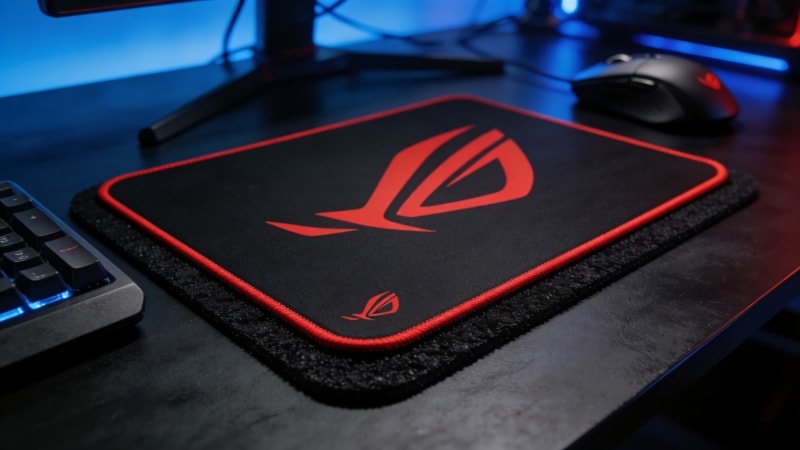
The bottom substrate of the mouse pad is fundamental to its performance. We insist on using natural rubber as the sole substrate, as it directly determines the product’s stability and lifespan. Our high density rubber mouse pad remains firmly attached to the desktop, thanks to its non slip rubber base that provides a firm grip on the desk and prevents unwanted movement. This non-slip feature ensures the pad stays in place, which is crucial for precise mouse movements and optimal performance. The stability offered by the base is especially important for consistent use over time, supporting both gaming and professional tasks.
A. Advantages and Value of Natural Rubber
Stability (Anti-slip): Natural rubber possesses an excellent molecular structure, providing strong grip and ensuring the mouse pad remains firmly attached to the desktop even under intense use, preventing movement or slippage.
Environmental Protection and Health: Compared to many synthetic rubbers, natural rubber produces less odor (VOCs) during production and is more likely to pass international environmental certifications such as REACH and RoHS.
Cushioning and Durability: Uniformly foamed, high-density natural rubber provides stable cushioning support, effectively absorbing impact and resisting deformation caused by long-term use, thus improving product durability.

B. Specification Requirements – Precise Control
Buyers must focus on the following quantifiable indicators to ensure consistency in batch supply:
- Density Standard: The density value of the rubber must be specified (e.g., 0.23 g/cm³). Density is directly related to the material’s hardness and support strength. Mouse pads are available in two sizes and various shapes to meet different user needs and desk setups.
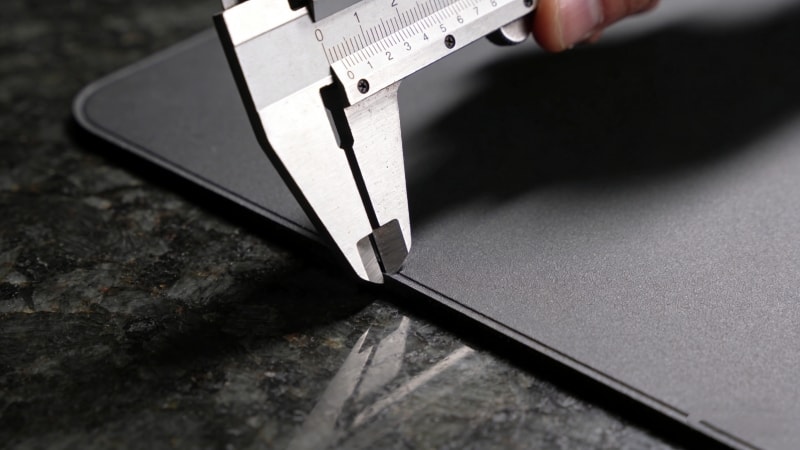
- Thickness Tolerance: In batch production, thickness deviations must be strictly controlled within an extremely small range (e.g., 0.1 mm). This is crucial to ensuring a consistent feel across all products.
- Odor and Environmental Certification: Suppliers are required to provide Material Safety Data Sheets (MSDS) for the natural rubber base material, demonstrating that it has passed rigorous odor and hazardous substance testing.
Selecting the perfect size is essential for different facilities, such as offices or healthcare environments, to ensure optimal usability. Proper packaging in a sturdy box is also important for safe delivery and maintaining product quality.
III. Core Element Two: Diverse Surface Material Selection and Performance
The surface material directly determines the speed and control of the mouse pad. The choice of surface affects the glide, consistent glide, and smooth glide of your mouse, ensuring effortless movement and reliable tracking. Our mouse pads are designed to provide just the right amount of friction for optimal performance, balancing speed and control for precise movements. We offer a variety of cloth and hard surface materials to meet different market demands, so selecting the right surface can be a significant upgrade for users seeking more than just performance.
A. Flexible Surface (Cloth) Specifications:
Fabric surfaces are currently the mainstream in the market, achieving different performance characteristics through different weaving methods:
Polyester: Offers the best overall performance, is easy to dye and print, and is the preferred choice for standard gaming and office pads.
Nylon: Stronger fibers, generally smoother surface, low coefficient of friction, suitable for users seeking high-speed operation.
Microfiber: Finely woven, providing a softer, more controllable gliding experience that feels great during extended use, often used in professional drawing or design.
Composite Materials: Specially customized fiber blends designed to achieve a specific balance of dynamic and static friction.
Some mouse pads also include memory foam for added comfort and ergonomic support.
Purchasing Considerations: Clear requirements must be placed on the weave density and the durability level of the surface’s waterproof/fouling-resistant coating.
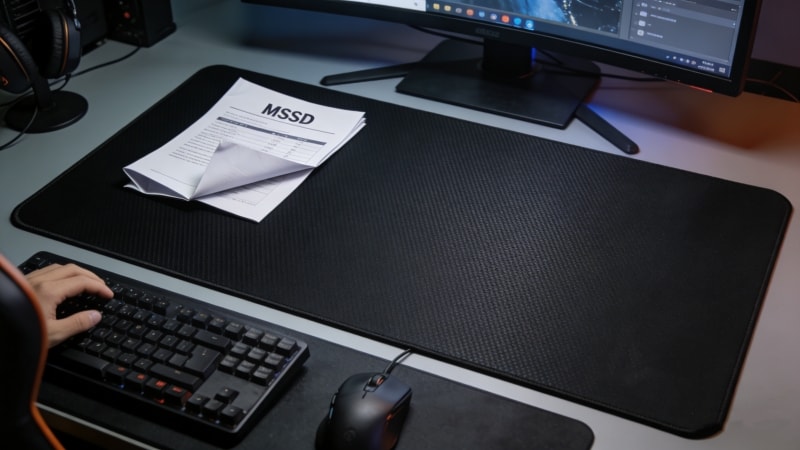
Larger cloth pads provide enough space for sweeping arm movements and can accommodate both mouse and keyboard, making them ideal for gaming or work setups.

B. Hard-surface Material Specifications:
Hard-surface materials offer ultimate speed and easy cleaning. Plastic is a popular hard surface material, often used for its durability and low-friction properties.
Glass Mousepad: Features an extremely low coefficient of friction and high abrasion resistance, suitable for professional gamers with top-tier speed requirements. Glass surfaces are also highly compatible with optical mouse sensors, enhancing optical performance and ensuring precise tracking.
PVC/EVA: A cost-effective option; the uniformity of its surface texture and the strength of its adhesion to the natural rubber base must be carefully evaluated to prevent delamination.
Purchasing Considerations: The flatness of the hard surface is crucial; it should unfold without any waves or bends.
QCK Performance is a notable example of a high-performance hard-surface mouse pad, offering specialized surfaces for optimized mouse movement and compatibility with both optical and traditional mice.

IV. Manufacturing Process and Dimensional Accuracy Control
Even the best materials require sophisticated craftsmanship to be transformed into high-quality products. Stitched edges and edge stitching are crucial for durability, as they prevent fraying and enhance the overall quality of a high density rubber mouse pad. The manufacturing process directly determines the product’s defect rate and long-term durability.
A. Edge Treatment and Durability
Stitching: High-density stitching is recommended. It effectively prevents the fabric layer from separating from the rubber backing, edge lifting, and wear during long-term use. Attention should be paid to the strength of the stitching thread.
Cutting Accuracy: For hard surfaces or laser-cut fabric mats that do not require stitching, the flatness and dimensional tolerances of the cut must be strictly controlled to ensure smooth, burr-free edges.
B. Dimensional and Flatness Requirements
Dimensional Accuracy: For bulk shipments, the actual measured length and width must be consistent with the specifications, typically within 1/2 mm, to prevent batch variations.
Flatness Test: For products in rolled packaging, the supplier should be required to provide a test report demonstrating that the mouse pad, after being opened, can completely return to flatness within a specified time (e.g., within 24 hours) without permanent curling.
V. Conclusion: A Reliable Supply Chain is the Guarantee of Success
High-quality mouse pads are a perfect combination of a stable and reliable natural rubber substrate, professionally customized surface materials, and strict manufacturing process control. For professional buyers, only by thoroughly understanding and strictly controlling these core specifications can they ensure the acquisition of competitive, high-quality products.
If you need more information about the professional specifications of high-density natural rubber substrates, customized surface materials, or to request samples for physical performance testing, please feel free to contact us.
Contact Us: Visit our official website: www.fdtrubber.com